Tech companies underestimate the power of the global South

Western tech companies are turning inward again, now that the geopolitical situation has become so uncertain. This newfound ignorance is a big mistake, because the future lies in the global South, where 90 percent of the world’s youth live. It is bursting with innovative power.
Companies have become inward looking again, after a decade of pivoting their digital products and services toward the Global South. They are afraid of the downturn in the economy and the unknown in these precarious and volatile geopolitical times. We witnessed this sentiment play out through the tech layoffs in early 2023, with projects around the Global South impacted the most.

This is a move in the wrong direction.

Far from the “rest of world” being a high-risk venture, organizations should view engagement with these regions as the only viable option to build innovative and sustainable technologies.

Next billion user labs
Around when my ‘Next Billion Users’ book was released in end 2019, I headed to Stockholm to engage with Spotify’s Next Billion User (NBU) lab, launched to study users outside the West. Google grew their NBU team exponentially in 2020 from a few dozen members to hundreds, in search for their next “blockbuster product.” Meta’s emerging markets group got rebranded as the next product experimentation team. Launched in 2019, this team intended to test the new hypothesis, “that the next big idea may come from a market outside the U.S.”

Tech companies’ interest in the Global South in the last decade is no surprise. In 2017, The Economist published a story that asserted “the world’s most valuable resource is no longer oil, but data.” Various market analysis reports suggest that the “next big trend” in digital won’t emerge from a Western market. Companies have witnessed how millions of users, primarily from the Global South, are coming online for the first time due to access to affordable mobile phones and data plans. India and China alone are home to most users today, and neither market is anywhere close to saturation.

Despite these global opportunities, fear has set in due to the current state of geopolitics and uncertain user markets. This is part of a broader global market reserve and retreat, triggered by institutions like Wall Street warning global investors of the end of globalization. Fortress gates are up again among European companies and their governments, where EU based policies like the Green Deal double down on “European values” instead of universal values for future digital innovations. Some companies dip their toes into this “rest of world” adventure, only to retreat them quickly, seeing no clear business model.

Going “local” is back in fashion, viewed as a pathway to resilience. Instead, it is the pathway of least resistance to status quo.

The myth of the local
Companies rarely build for the “local.” With scalability at the heart of digital innovation, the local is often a launching pad for the global. For decades, this has translated into typically Western contexts and concerns becoming universal templates. The prototype user for the designs of our everyday lives has long been “WEIRD”—Western, Educated, Industrialized, Rich, and Democratic. The rest of the world has had to contend with customizing and indigenizing these imposed models to make these products work for them. In essence, “local” is that which is familiar, proximate, and known.

Times have changed. In recent years, companies have been under pressure to mitigate entrenched biases in their training data for more inclusive digital products. For example, Adobe expanded their equity team to address the barriers to understanding and access, especially on communities that have been chronically underinvested and marginalized by them. Timothy Bardlavens, their director champions this effort as a “business imperative,” one that is committed to reversing the historical trend where “product innovation has focused on the majority, often leaving many behind.” While the intent is commendable, we need to recognize that the majority have long been outside the West.
Today, the Global South contributes 80 percent to global growth. Close to 90 percent of the world’s young population reside in these regions. The Global South is not a mere demographic advantage or a source of data harvesting for AI hungry tools as one might assume. It has become a vital space for innovation. These next billion users are deeply aspirational users, highly driven to shape tech spaces, not just as consumers but as creators of the future digital economy. They are eager to leave the past behind. Weak legacy infrastructures and systems inherited from their colonial aftermath has propelled the Global South to leapfrog across sectors, fueling the reinventing of their nations and societies. It is time for organizations to take note.

Imitator nations reconsidered.
In 2015, former Hewlett Packard CEO Carly Fiorina described China as an imitator nation in her interview with TIME, “I have been doing business in China for decades, and I will tell you that yeah, the Chinese can take a test, but what they can’t do is innovate…they are not terribly imaginative.”
Fast forward to 2023, where even Fiorina would not agree with her former self. China has earned the reputation as a global hub of innovation in tech and renewables among other vital sectors. In 2018, China entered the global innovation index rankings as one of the top twenty most innovative countries in the world. They have pioneered the world’s first quantum-enabled satellite, the world’s fastest supercomputer, the world’s largest and fastest radio telescope, the world’s first solar-powered expressway, the world’s largest floating solar power plant, and the world’s thinnest keyboard.

It should give us pause when Elon Musk, still perceived by many as the epitome of Western innovation, sees the future of X to be the next WeChat- China’s “everything app” or super-app, which was released a decade ago. Amazon launched livestreaming for retail in 2019. By then China’s Taobao livestreaming network was already operating profitably, with its top influencers generating 15 million dollars in sales. Meta has earned the reputation as a copycat in the last years, as they race to “borrow” features from the likes of China’s TikTok. China Daily concludes confidently that, “no matter how much the country’s creativity may differ from the West, China will lead the world as a global leader in science and technology by 2030.”

Beyond Chinese “exceptionalism”
The rhetoric of exceptionalism has long served as a way for nations like the United States and more recently China to signal their unique role as leaders on a global stage. Employing exceptionalism is a double-edged sword though. While it can be a powerful tool to foster national pride and legitimate controversial decisions, it also brings to question how and why these nation’s values and models should be emulated and scaled.

As Western companies see the rise of China across sectors, they also have bought into the rhetoric of their exceptionalism. They separate China’s innovative capacities from other nations in the Global South. On the contrary, China, while impressive in their strides in digital innovations, is no exception. While European and American regulators discuss how to curtail the tech titans and get the market working again, India has gone ahead and set up their “tech stack,” the largest open source, interoperable, and public digital infrastructure in the world. This is enabling entrepreneurs to build their various products and services away from the Apple and Google duopoly that constrains competition and choice. As creators struggle for fair value from Spotify, Abu Dhabi has become a global hub for music-streaming apps. By 2028, 70 percent of global subscriber growth for music- streaming services is estimated to take place in the Middle East, Latin America, Asia Pacific, and Africa.

If you want to assess the future of crypto, you need to look at India, Nigeria, Vietnam. The Central & Southern Asia and Oceania region dominates the top of the 2023 Global Crypto Adoption Index, with six of the top ten countries located in this region. This should not be a surprise. The volatility of many Global South currencies, and few recourses to protect your savings, as well as the youth’s appetite to embrace innovation has led to quick adoption of these financial alternatives.

Inclusion as innovation
Despite the Global South demonstrating their innovative prowess, the imitator label remains a sticky factor. This perception often translates to Western companies treating these countries as beneficiaries and not as partners and leaders in global innovation. This cognitive dissonance leads companies to view their own international teams as disposable, have little patience for a business model to emerge in these contexts, and under-utilize their regional teams for thinking out-of-the-box.

Many multinationals I have engaged with over these years continue to treat the Global South as back offices for cheap labour and rote tasks instead of being part of ideation and execution in their own contexts. Venture capitalists give far shorter timelines for Southern entrepreneurs to yield profits compared to their Northern counterparts. Templates of innovation are imposed upon these entrepreneurs, demanding they innovate within conventional constraints. This only guarantees more of the same.

It is time we stop underestimating the Global South. Instead, companies should channel their energies by looking at how different business cultures, contexts, and consumers can help to rethink opportunity, safeguards, and creative futures with the world’s majority. Inclusion is not an altruistic act. It is an essential element in the revival of a genuinely free and global market to generate solutions for the wicked problems we face today as a humanity.

New book out with Amsterdam University Press

FemLab, the Feminist Futures of Work initiative I co-founded with Usha Raman kickstarted 2023 with the book launch at Spui25 in Amsterdam. This was followed with a retreat on Building Labor futures to engage deeper with the essays in this book. We are absolutely thrilled to see this book out and its final digital version will be released in April. The gorgeous illustrations are done by Siddhi Gupta, from Justice Adda, our long standing partner law and design organization. Below is a brief on the book. Please check it out and let us know what you think!

The future of work is at the centre of debates related to the emerging digital society. Concerns range from the inclusion, equity, and dignity of those at the far end of the value chain, who participate on and off platforms, often in the shadows, invisible to policymakers, designers, and consumers. Precarity and informality characterize this largely female workforce, across sectors ranging from artisanal work to salon services to ride hailing and construction. A feminist reimagining of the futures of work—what we term as “FemWork” —is the need of the day and should manifest in multiple and various forms, placing the worker at the core and drawing on her experiences, aspirations, and realities. This volume offers grounded insights from academic, activist, legal, development and design perspectives that can help us think through these inclusive futures and possibly create digital, social, and governance infrastructures of work that are fairer and more meaningful.

New Book Contract with MIT Press/Harper Collins India

Am incredibly excited to share the big news on my new book, ‘Next Billion Ready: Designing systems to include the world,’ in contract with two fabulous publishers – The MIT Press & Harper Collins India . This comes at a perfect time as I have been awarded the residency fellowship at Bellagio, Italy by Rockefeller Foundation which will give me the time to think, write & connect with amazing thinkers and doers. My book will draw from my last 3 years of fieldwork with the next billion user groups and engagements with diverse organizations invested in AI innovations in the Global South.

Tech Trend reports indicate that the next big trend in digital won’t emerge from a Western market. There is pressure on governments and corporations to capture data in the AI arms race for the future of innovation. India and China already account for most of the users in the world without having reached market saturation. A typical user in the Global South is twice as active online than their Northern counterpart. Major tech companies have got on the bandwagon, setting up next billion user labs to gain insights on this vast user base. Inclusive design is less altruistic and more consumer centric, attuned to the potential of diversity to foster innovation. UX researchers, media startups, aid agencies, and business folks are eager to unpack the blackbox on this user group.

In The Next Billion Ready book, I propose ways in which we can envision new digital systems, and thinking to include the world. Drawing from fieldwork insights on young creators in diverse contexts such as Brazil, India, and Bangladesh, I reveal how their understandings of metrics shape their creativity, trust, identity, and political action. In my engagements with numerous public and private sector organizations, I share my learnings on what keeps UX designers, policy makers, digital startups, and aid agencies up at night as they struggle with tensions between risk and opportunity, and localization and scalability in design.

With rising geopolitical tensions, it is tempting to revert to old approaches to design and outreach. It would be a serious mistake to go back to viewing the next billion users as mere data sources to be extracted. Instead, I make the case that they are at the forefront to help us reimagine the future of work, creativity, finance, banking, and even the fate of our planet. My new book is targeted at UX researchers, designers, tech entrepreneurs/investors, media companies, & other orgs that focus on designing systems, products, & services to genuinely include the world. Really looking forward to getting this book out soon!

Speeding into the new year

So much has happened since the start of this year. I have that feeling of running to stand still. Beautiful experiences, powerful conversations, ah ha moments, deep discussion and yet, have not been able to fully digest these times, to appreciate their full impact on me as work has exponentially increased. And yet we do what we do, move by the forces that are out of our control. I need to keep flagging for myself that passion is not good enough reason to speed this fast as it takes its toll on one’s mental and physical health. I cling to my sabbatical that kicks off this summer and promises quiet time for me to write my new book. Cannot contain my excitement as the full book is in my head, ready to be out on paper. And so I wait for that summer, glancing at the clock once in a while, marking the calendar boldly, promising myself that I will bring everything else to a standstill – become the writer again -first and foremost.

In the meantime, FemLab, the organization I co-founded has found a kindrid spirit in MICA-the School of Ideas in Ahmedabad. We organized a roundtable on the platform economy, gendered informality and the future of work in January where our team got to engage with the MICA staff and audience and share their findings from over two years of research during the pandemic. I also will be their Distinguished Visiting professor this April and am looking forward to being there and meeting their team face to face, a precious novelty these days.

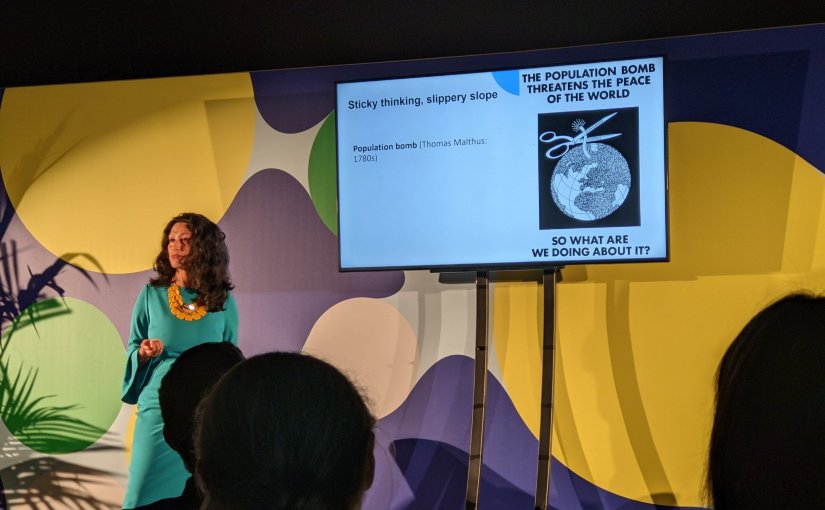
Gave a keynote on Decolonising Approaches to Users and Audiences in the Global South at CAMRI- Westminster with such a wonderful group of thought leaders including Tanja Bosch, Cape Town University, South Africa on decolonising digital media research methods, Prof. Guobin Yang, Annenberg School for Communication, University of Pennsylvania on How Not to Theorize a Pandemic from Afar, Prof. Claudia Magallanes Blanco, Universidad Iberoamericana Puebla, Mexico on decolonizing through self-representation, and Prof. Marwan Kraidy, Northwestern University, Qatar on Entangled Modernities. It was a packed house and the energy was amazing. Also was part of the Geomedia speaker series on Spatial Justice and Data Justice where we really dug deep into these topics with some of my favorite people – Emiliano Trere, Senior Lecturer in Media Ecologies and Social Transformation, Cardiff University and Anne Kaun, Professor in Media and Communication Studies, Södertörn University.

.

In line with this decolonial wave, got to also discuss data colonialism, with another anthropologist Philip McKenzie, the host of Deep Dive. He is considered one of the “75 Leaders of Tomorrow” by Capture Your Flag and his podcast has hit some charts and no wonder- he knows how to get you talking!

We touched on crypto, on the gig economy, on the datafied ‘us’..Who are the arbiters of doing good and why? How can history inform our socio-digital future? Can we speak in global terms as we immerse in particular cultures? What is unsustainable in the way we organize work and play in this datafied era, and how do we speak about these issues and more. Got to also do a number of interviews with WeContent and related media groups like a top Romanian media magazine –AList Magazine on cross-cultural content marketing, how culture shapes communication, what to make of an audience with the rise of Squid Games and other such shows which tells us that we are on the brink of opening up to what audiences are actually receptive to – bold new worlds, new ideas, fresh stories, and language is not a barrier but may add context and flavor to immersive storytelling.

On the academic front, Kiran Bhatia, this kick ass brilliant PhD and upcoming Assistant Professor at Tulane university and I partnered on this article called Discursive Toolkits of Anti-Muslim Disinformation on Twitter. In this article, we investigate the socio-technical ecology of Twitter, including the technological affordances of the platform and the user-generated discursive strategies used to create and circulate anti-Muslim disinformation online. During the first wave of Covid-19, right-wing followers claimed that Muslims were spreading the virus to perform Jihad. We analyzed a sample of 7000 tweets using Critical Discourse Analysis to examine how the online disinformation accusing Muslims in India was initiated and sustained. We identify three critical discourse strategies used on Twitter to spread and sustain the anti-Muslim (dis)information: (1) creating mediatized hate solidarities, (2) appropriating instruments of legitimacy, and (3) practicing Internet Hindu vigilantism. Each strategy consists of a subset of discursive toolkits, highlighting the central routes of discursive engagement to produce disinformation online. We argue that understanding how the technical affordances of Social Networking Sites are leveraged in quotidian online practices to produce and sustain the phenomenon of online disinformation will prove to be a novel contribution to the field of disinformation studies and Internet research.

Of course, what was super special in February was my first in person teaching with my students for two courses after 2 years of teaching them online! It was so surreal, so beautiful to just walk into the classroom and erase the last two years, as if nothing had happened. Felt natural, felt easy and felt at home. So that’s in a nutshell the crazy few months that has passed me by.

Reflecting on 2021 and beyond

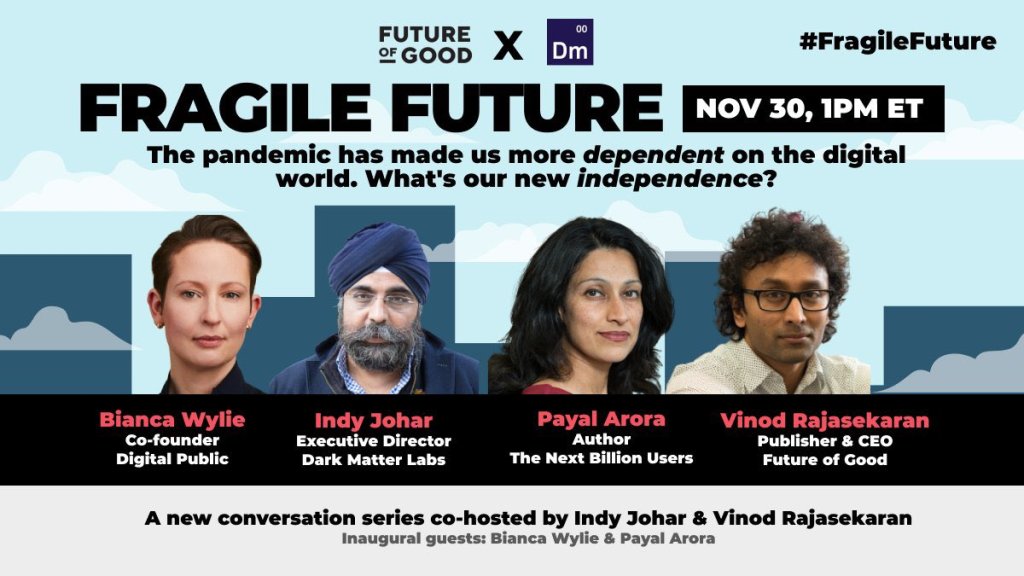
The end of 2021 was different and yet the same. I wrapped up the year with some amazing experiences, from a wonderful launch podcast on Fragile Futures to finally the in person COP26 conference on Design for Planet. Here I spoke about the challenges of pitting digital inclusivity of the next billion users against the rise of data centers and its impact on the planet. Also, got to talk about diversity and inclusion with EUROPOL, AI and Creativity with Adobe, and feminist design with the NGO Sudwind .

I am incredibly grateful to have found my calling. I love the intellectual life. I love the thrill of unpacking an idea, engaging with different people and organizations to critically engage on the future of society, and share this with my students on an ongoing basis. Yet, beneath it all, I remain angry. It’s this slow burn anger that comes from an ongoing impotence against the toxic culture of academia.

Academic life, although having moved online during the pandemic, remains the same in terms of its toxic culture of overwork, and undervalue of its workers. For a profession that centers critical thinking, innovation, and societal impact at it’s core, it has shown remarkably little imagination in the reshaping of this field. It is astounding how tone deaf this system has been with the onset of the pandemic, channeling more energies in the rhetoric of inclusiveness, diversity, and societal impact and little towards their workers and the structures that perpetuate precarity, fear, stress, depression, and worthlessness.

The system consumes its workers and thrives on the honor culture which translates to basically free labor. This year was no exception as I was asked to be on numerous boards, to review reports and articles, to serve on external PhD and advisory committees and more – pro bono of course in the name of duty and care. Why do it then? Collegiality, curiosity, and camaraderie – the gift culture in academia which serves as perfect fodder for institutions to appropriate and exploit. Teaching, while being constantly evaluated by a minority of students, means little in terms of the bottom line of promotions. Academics in this neoliberal enterprise called higher education are meant for one primary purpose – to be fund raisers and project managers. The chase of grants equate value and nothing else. There is little room to define value outside of this scope.

I do not deny the worth of activism in academia over the years but it is unfair to burden an already overburdened staff to fight for the basics of being treated humanely. Change must come from above and in a collective and global fashion. We need to let go of academic rankings as equivalent to quality education and scholarship, recognize the deep Anglo-saxon bias in academic scholarship and citation politics and gender bias in management policies, and instead rethink our place in society and the role we must play to change society for the better.

In the meantime, much like many academics I know, I cocoon myself in my own networks and with my own people, the little bubbles I have nurtured with craft and care over these years. I navigate with detachment, estrangement, and angry silence, holding onto my deep passion for ideas and communities and moving forward by reminding myself that my mind and body needs protecting as covid is here to stay with us for much longer than we would like to admit.

FemTech designs for the next billion

I am delivering a keynote for NetHope’s 20th Anniversary Global Summit on Digital Now /Future of Work with a feminist view of the rising Next Billion Users, their world of work, and the responsibilities by vested stakeholders. I will shed light on the burgeoning industry of femtech and what this means for inclusive design.

This talk will draw from the FemLab.co field research and insights our team has been generating in the last two years. The keynote will be delivered alongside a fantastic line up of speakers from the humanitarian and the tech sector including Microsoft, Cisco, Save the Children, CARE, Twilio, Salesforce and many more. Am glad to get this opportunity to speak to tech philanthropists and other corporate sector clientele and hope that these discussions can shift thinking on how they invest, what kinds of evaluative measures are needed, and the nature of sustainable and ethical investing for global fair work conditions.

UNHCR grant on Digital leisure & Displaced populations in Brazil

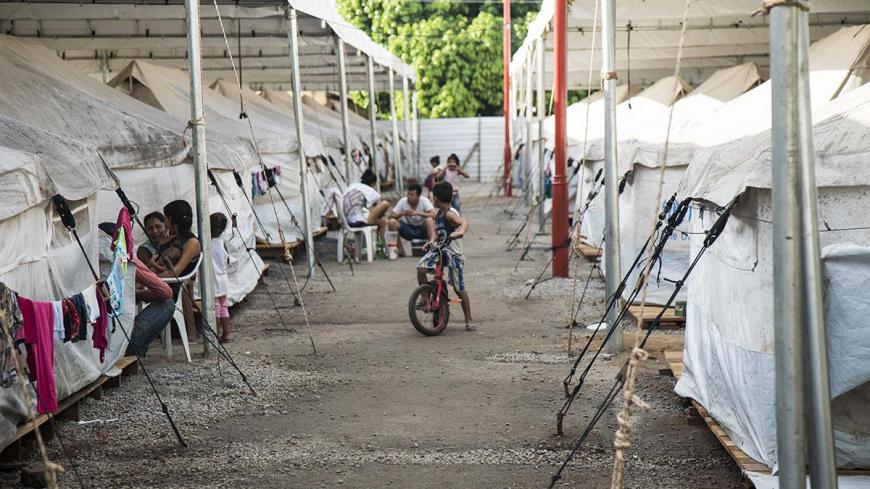
Am delighted to announce the launch of the ‘Digital Leisure and Displaced populations in Brazil’ project with John Warnes and Erika Perez Iglesias from UNHCR, the UN Refugee Agency Innovation Services.

“Bringing to light the divide in access to digital leisure challenges the sacred tenet on which the global digital project has been built upon over decades — the belief that a good digital life for the poor would be based in work and inherently utilitarian.”

Arora, 2019 — The Next Billion Users: Digital Life beyond the West


Alongside my colleague Amanda Paz , we have brought together a brilliant team including Daniela Jaramillo-Dent, Julia Camargo and Paula Wittenburg to execute this project and generate impact on policy and practice. It is particularly uplifting to see my Next Billion User book impact real world practice in shifting approaches in connectivity and the understanding of the full media life of refugees. While the UN Refugee Agency (UNHCR) has pursued an agenda of enhanced connectivity and digital inclusion for the forcibly displaced for a number of years, many of the interventions have been tied to specific developmental goals, such as education, the use of digital financial services, and greater access to information. For a decade, I have been challenging the notion that those targeted with such interventions prioritise connectivity for these purposes. Rather, the agenda highlights leisure as a key driver for adoption of digital technologies, and a key use case for such technologies that bring indirect benefits beyond the ‘virtuous’ aims of humanitarian aid and development programmes globally. This has been the key arguments I have been making throughout my research career and am happy to see that finally I get to see my ideas translated to practice.

In the coming months ahead, UNHCR and our Erasmus University team along with those in Brazil will join forces on this new project and undertake primary research with displaced communities in Brazil to hear directly from them about how leisure and entertainment impact their use of digital technology. Read the rest of our proposition here.

FemLab taking shape

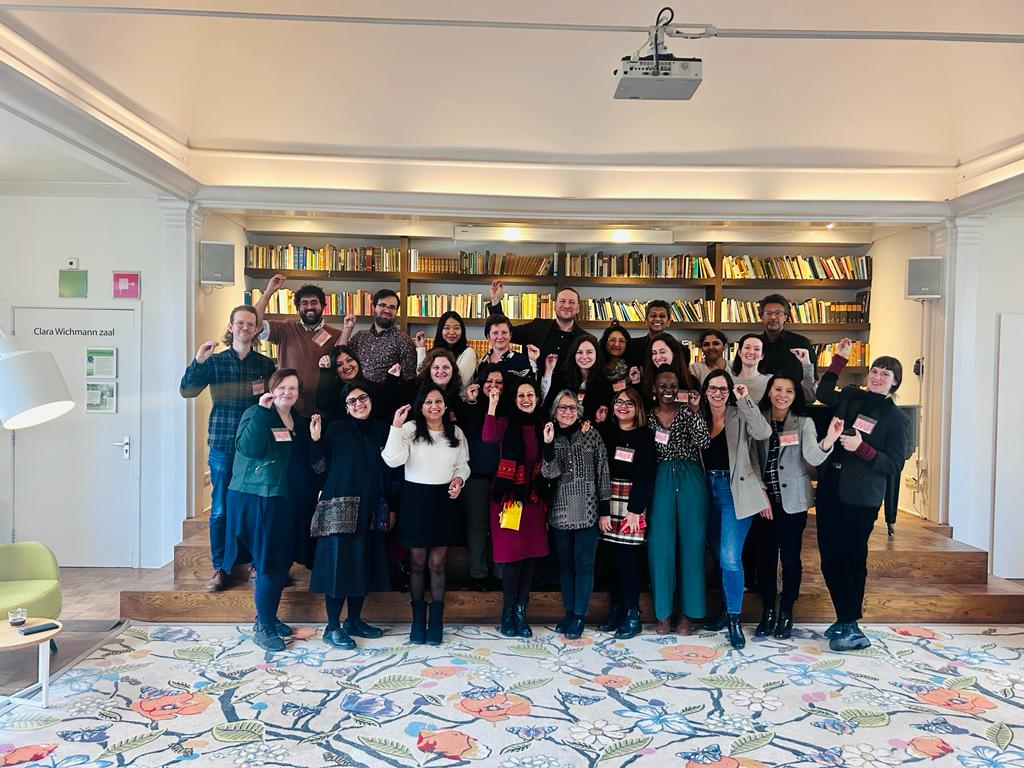
What a journey it has been with FemLab.Co, an IDRC funded initiative that Usha Raman and I kick started in January 2020, right before the pandemic. Our work involves the very people who have been the most affected by covid19 – marginalized and precarious women workers in the Global South struggling to make a living and now with the added burdens of health risks, domestic violence, and loss of all kinds – social, financial, and economic. It has been a challenge to say the least to capture their voices and do justice to them. Unless you have a superb and dedicated team like we have! We have been fortunate to bring together a real collective of sorts – junior and senior scholars in India, Bangladesh and the Netherlands taking the lead on examining how specific sectors like salon services, sanitation, ride-hailing, garments, artisanal, and construction have been impacted across different stakeholders and how diverse digital platforms and media technologies have been used to collectively bargain, push back and shape the future of work that is more justice-driven.


Generating impact

As I look back in the last six months, we have succeeded in doing a lot! FemLab.co members contributed to the launch of the Global Forum Colabora.Lat 2021 a collaborative governance initiative in Latin America.

It will study and make recommendations about the governance models of the public policies and social initiatives implemented in response to the COVID-19 pandemic. Colabora.Lat Implementation Council is made up of Asuntos del Sur (Argentina), National University of San Martín of Argentina, Universidad ICESI (Colombia) Faculty of Humanities of the University of Santiago de Chile, Friedrich-Ebert-Stiftung (Bolivia), Diálogos Organization of Guatemala and Nosotrx_s (Mexico). Check our team video pitch here.

In the last year, we have attracted passionate interns, and external affiliates from different fields such as Meeshu, Ola Mobility Institute, Web Foundation, Harambee Youth, Zyenika Inclusive Fashion, and many more organizations and leaders who have contributed their thoughts to our weekly blog series.

We engaged with Urban Company and their staff to gain insights into the Salon Services sector. This resulted in an article spearheaded by Sai Amulya Komarraju, research lead of the Salon Services sector. The paper ‘Agency & Servitude in Platform Labour’ has been published in a top media journal Media, Culture & Society that has been trending and has been requested by diverse organizations such as UNDP (inclusive innovation lab focus), East-West Seed company (smallholder women farmers and digital platforms focus), and several UX designers focused on the next billion market.

Another key collaborator is Rumman Chowdhury, director of the Machine Learning Ethics, Transparency, and Accountability (META) team at Twitter and Forbes listed Top 5 listed most influential people who are shaping AI (2021). She and I co-edited a Special Issue on ‘Cross-cultural feminist technologies’ (blog) & full essay for the Global Perspectives, UC Press .

This issue features feminist practitioners like Charlotte Webb – founder of the Feminist Internet, Design Beku – a feminist design initiative in India, Galit Ariel- AR feminist, Whose Knowledge, and other such cutting edge organizations and scholars invested in feminist approaches to digital design and deployment for social change.

Speaking across the aisle

I have been very fortunate to find a dream collaborator and co-leader in Usha Raman. She is such an incredibly nuanced thinker, kind and generous person and scholar and empathetic leader. We have both been using our platforms to promote the exciting work emerging from our team and affiliates.

She was nominated as the Vice-President of IAMCR, a preeminent worldwide professional organization in the field of media and communication research. She was instrumental in the organizing of their annual conference in July 2021 where feminism, media and labour panels were organized. She also presented at another eminent conference International Communication Association on ‘Platform work and the planetary economy: global design, local experience’. 

Likewise, I gave talks about FemLab work at the Lord Kelvin Adam Smith Symposium 2021 on the ‘Manifesto for Inclusive Digital Futures,’ and UNDP’s Istanbul Innovation Days 2021: “Development & Its Futures” where government officials and prime ministers, global activists, founders of thinktanks, and other innovation leaders came together to rethink alternative development futures.

I also presented the paper co-authored with Usha Raman ‘Fair work, feminist design and women’s labour collectives in the digital age’ at the Oxford’s Digital Pathways. This is an Oxford research initiative which aims to reach across the fields of public policy, law, economics, computer science and political science to support informed decision-making on the governance of digital technologies specifically. This paper serves as a foundational text for the FemLab project and is forthcoming in Mark Graham and Ferrari’s open access MIT Press book on Digital work in the Planetary Market.

I also gave a keynote on feminist directions for sustainable change for The Hague Humanity Hub and panel dialogue with directors at Asser Institute,  Clingendael Institute, and Leiden’s Center of Innovation.

Productivity and mental health

Clearly, our team has been deeply productive despite these challenges as reflected in the numerous talks, media articles, publications in the pipeline, and collaborations we have managed to churn out (check our FemLab site for more updates ! ). Yet, this makes me nervous as life becomes stripped of much of its complex and beautiful engagements through travel, social gatherings, and physical contacts, much needed to nurture our souls. So we divert much of our creative energies into our work, resulting perhaps in high productivity but at the cost of an impending mental health crisis. It does take its toll on our body too as I have personally experienced in the last year and a half. I am unable to stop. Unable to take time off. If I pause, I think of the family I have not seen since the start of the pandemic, the silence of empathy for international scholars like myself who are away from family and friends and often isolated, like a cog in the machine, churning out and being the stellar academic and practitioner at the cost of a personal life. There is much lip service to supporting employees but the game remains the same- a slave to global rankings and metrics, of chasing after grants, of teaching and publicizing and networking and well, the list goes on. What does give me comfort are the kind and generous people I work with in this team and those I have come across through such projects that reminds me that it still is worth it.

#DesignUpForACause

As the second wave in India unfolds with disastrous consequences and with my continued distance from family, colleagues, and friends in India, I am grateful that the design community has come up with a small way for me to contribute! The organization DesignUp has stepped up and has succeeded in getting an online event #DesignUpForACause going for June 2021 where all the proceeds go to charities in India. Please register or donate if you can and become part of this vibrant design collective.

#DesignUpForACause | #DUp21 Virtual Conference June 11-20 I https://cause.designup.io
With Don Norman Natasha Jen, Payal Arora, Julie Zhuo, Stefan Sagmeister, Daniel Burka, Jan Chipchase, Jon Kolko, Surya Vanka, 👨🏻‍💻 Andy Budd, Alexander Shilman, Katja Forbes, Suresh Eriyat, Jay Dutta

Rest of World Op Ed: AI isn’t going to save us

The AI solutions championed by tech titans promise to repeat a toxic history of self-defined goodness.

My Opinion piece is out in the Rest of World

Imagine a world with no elephants. Resolve, a nonprofit committed to ending poaching of endangered animals, warns that this fiction could become fact in a mere decade, as an elephant is killed every 15 minutes by a poacher.

Intel Corporation’s AI for Social Good project is implementing a tech solution to the crisis of illegal poaching: TrailGuard artificial intelligence (AI) captures images of suspected poachers and alerts park rangers. This system is one of several, including the Microsoft-supported Elephant Listening Project, Google’s Wildlife Insights AI, and Alibaba’s cloud computing for conservation, created by tech giants. These computational networks are designed to process significant amounts of incoming security data at extraordinary speed and accuracy. Where humans fail, there is renewed faith in AI to save our planet. Click here to read the rest.